
Industrial fan selection starts with the duty point, not the fan name. Airflow and static pressure define the operating requirement; temperature, contaminants, installation geometry and control strategy determine which construction is safe and efficient.
1. Define the duty point
Record the required airflow in CFM or m³/h and the total static pressure at the design condition. Include duct, filter, coil, damper and terminal losses. A selection without a verified system resistance is only a guess.
2. Match the fan family
- Axial fans suit high airflow at low-to-medium pressure.
- Centrifugal fans are preferred when pressure, filtration or duct resistance is higher.
- Jet and smoke fans serve car parks, tunnels and smoke-control strategies.
- Utility and custom fans cover constrained layouts and project-specific duties.
3. Check the operating envelope
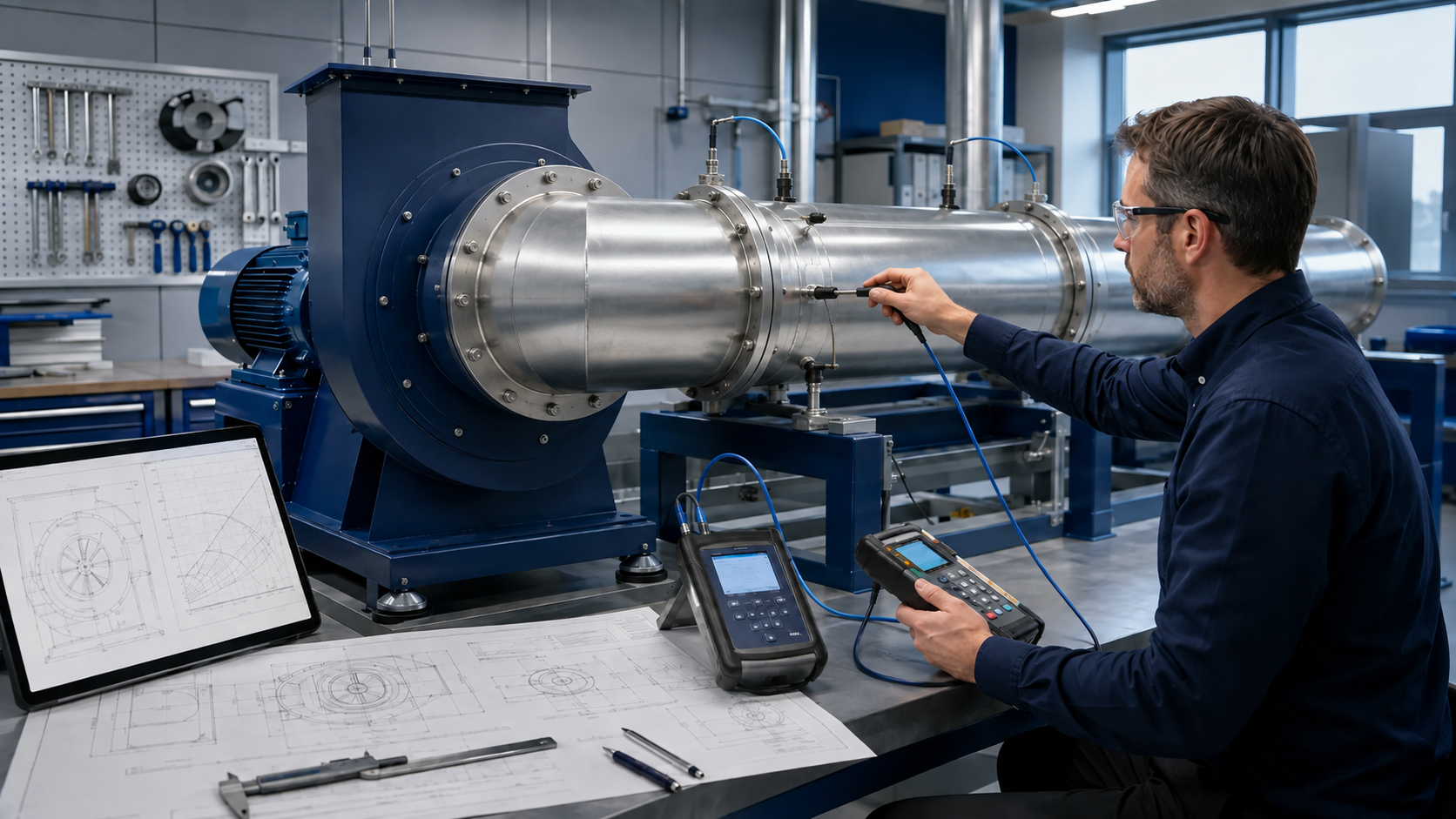
Confirm motor power, efficiency, sound, speed, materials, coating, ambient temperature, service access and applicable smoke-rating requirements. Select near the stable, efficient region of the fan curve and allow a sensible control margin.
4. Submit complete project data
Provide the duty schedule, drawings, electrical supply, environmental conditions and required standards. RAFAVENT can review the data and prepare a project-focused selection.
Next step: explore the product range or send your project specifications.