
A reliable MEP support system carries services safely, preserves access and coordinates with structure, architecture and other trades. Good support design begins before installation and turns project loads into a clear, buildable system.
Start with coordinated information
Collect coordinated drawings, service sizes, elevations, equipment loads, insulation thicknesses, maintenance zones and structural fixing constraints. Identify seismic, vibration, fire-rating and corrosion requirements early.
Define load paths
Each pipe, duct, cable tray and item of equipment must transfer its dead, operating and occasional loads into the structure. Consider point loads, distributed loads, eccentricity and combinations—not only the catalogue capacity of one component.
Select compatible components
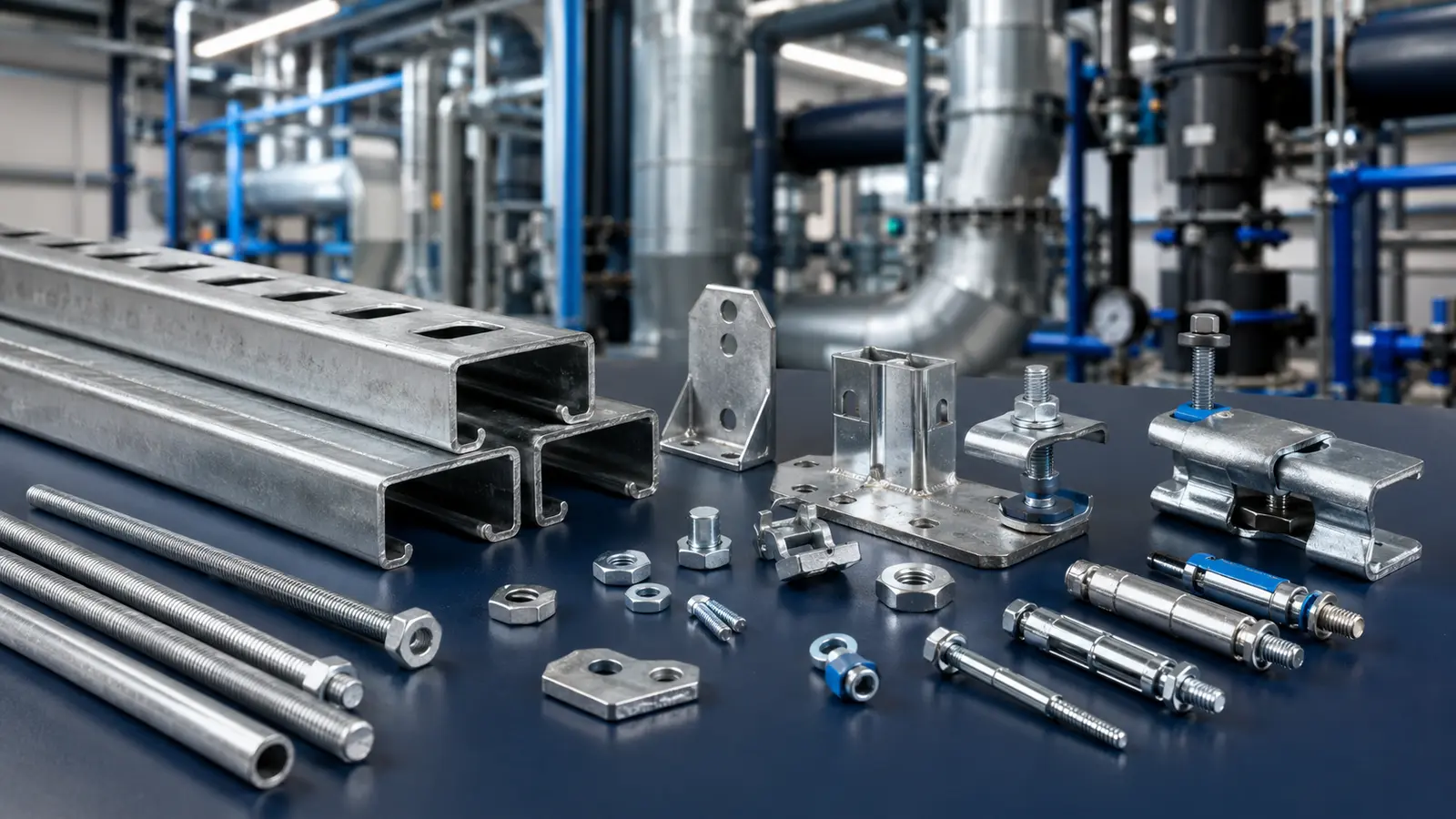
Match strut channel, Support Profile, brackets, threaded rod, anchors and accessories to the verified load case and environment. Component compatibility and connection detailing are as important as member strength.
Coordinate and document
Set support spacing, routes and shared frames with clash-free access. Issue drawings, schedules, BOQ and calculation assumptions so procurement and installation use the same design basis.
Verify on site
Check substrate condition, anchor installation, torque, alignment, bracing and field changes. Record deviations and obtain engineering review before accepting substitutions.
Need a project-specific system? review RAFAVENT MEP capabilities or send drawings and load data.